Is Pottery Barn Furniture Worth It?
What Pottery Barn furniture is made of, what it costs, and who it suits: a warm, traditional look at a mid-market price with real construction behind the upholstery and case goods, and where a designer collaboration is most of what you are paying for.
Designer Discount Club
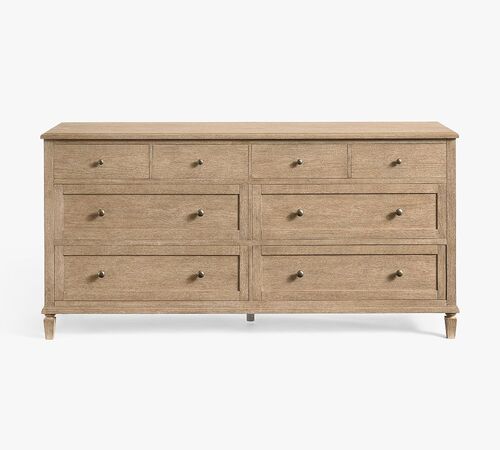
Pottery Barn is worth it if you want warm, traditional furniture that reads as settled rather than trendy, and you want to buy a whole room from one place without it looking like a showroom. That is what they are good at. The upholstery is comfortable in a soft, sink-in way, the case goods are heavy and substantial, and the fabrics and finishes come in enough variations that you can usually get the exact combination you had in mind.
Your money mostly goes into scale, finish and range. A Pottery Barn dresser is a big, solidly built piece with a hand-applied finish and drawer hardware that feels considered. Their upholstered pieces sit on braced frames with steel spring decks rather than webbing. You are not paying for exotic timber or hand-cut joinery, and you are not paying custom workroom prices either.
Buy it if you like the look and want a room that hangs together without ordering from five places. Skip it if you are buying a designer collaboration piece purely for the name on it, or if you want the kind of build sheet that a higher-end brand publishes on every single item.
Key Takeaways
- •Traditional styling, generous scale, and a huge range of fabrics and finishes.
- •Upholstered pieces use engineered wood frames with corner blocks and steel spring decks.
- •Case goods are wood and veneer over engineered panels, kiln-dried so they stay flat.
- •Furniture, excluding decor, lighting and tabletop, runs roughly $350 to $2,400, with most pieces near $1,100.
- •Some pieces carry Contract Grade and UL GREENGUARD Gold, which are worth having.
- •Best for whole rooms in a traditional house. Less compelling for one statement piece.
What Pottery Barn furniture is made of
Take the Sausalito dresser, which is about as representative as their case goods get. It is built from meranti wood with MDF and sungkai veneers. The wood is kiln-dried before it is cut, which is what keeps a big case piece from warping, splitting or cracking over time. The MDF is there for structural stability, the veneer for a face that holds an even color and does not check over time. An anti-tip kit comes in the box.
That combination is normal for furniture at this price and it is a reasonable way to build a dresser. A dresser made entirely of solid planks moves with the seasons. A veneered case over engineered wood stays flat.
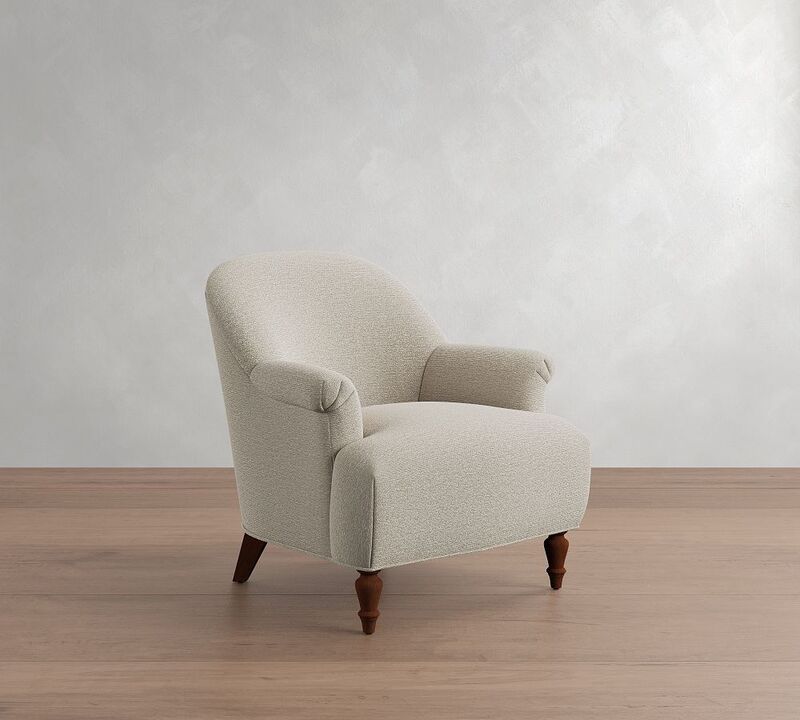
Upholstery is built the same way you would want it built. Their Penelope armchair sits on an engineered wood frame with corner blocks at the stress points, no-sag sinuous steel springs across the deck, and a polyester-wrapped foam core in the cushion for a firmer seat. Legs are rubberwood. Corner blocks and a sinuous spring deck are what you want to see under a chair at this price.
Part of the Pottery Barn range carries two labels that mean something specific. Contract Grade is Pottery Barn's own label for pieces they say are designed and engineered to meet standards and best practices from select ANSI and BIFMA testing protocols, which are the American furniture industry's testing bodies. They describe that assortment as built to perform in commercial and hospitality settings, which in a house means it is aimed at harder use than you are going to give it. UL GREENGUARD Gold is an emissions certification: the piece has been screened for chemical and VOC output, which matters if it is going into a nursery or a bedroom.
Neither label is a promise about how long a drawer glide lasts. Both are specific claims Pottery Barn has put its name to, which is worth something when you are choosing between two pieces that look alike.
What Pottery Barn costs
Their furniture, setting aside the decor, lighting and tabletop, runs roughly $350 to $2,400, and most of it is near $1,100. Dining chairs and small accent pieces are the cheapest, big case goods and sectionals the most expensive. Count everything Pottery Barn sells and the range widens out to roughly $50 to $2,200, because the decor and tabletop pull the bottom down.
That puts Pottery Barn a little below the middle of the brands we carry. It is a solidly mid-market brand, with very little above $2,400.
Prices move, especially around their sale calendar, so treat those numbers as typical for the brand rather than today's price. The product page has the current figure.
Three pieces worth knowing
Penelope Upholstered Armchair, around $799 in heathered chenille. A compact, tailored armchair with a firm seat rather than a soft one, on an engineered wood frame with corner blocks, steel springs and rubberwood legs. It carries both Contract Grade and UL GREENGUARD Gold. For an accent chair under $800 that is a lot of engineering, and the firm cushion means it sits upright rather than swallowing you, which is usually what you want from a chair you put in a corner.
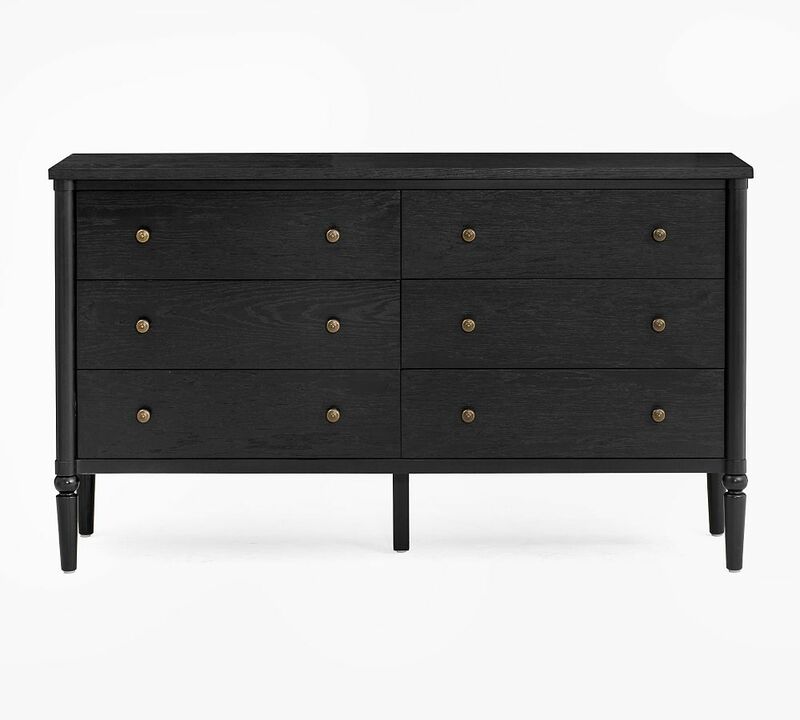
Chris Loves Julia Extra Wide Dresser in Onyx, around $1,399, 62 inches wide and 36 high. This is the design piece of the three: a hand-finished near-black case, turned legs, brass hardware, from Pottery Barn's collaboration with Chris and Julia Marcum. It is a good-looking dresser and a wide one, which is useful in a bedroom where you would otherwise need two. You are buying it for the way it looks, and that is a perfectly good reason.
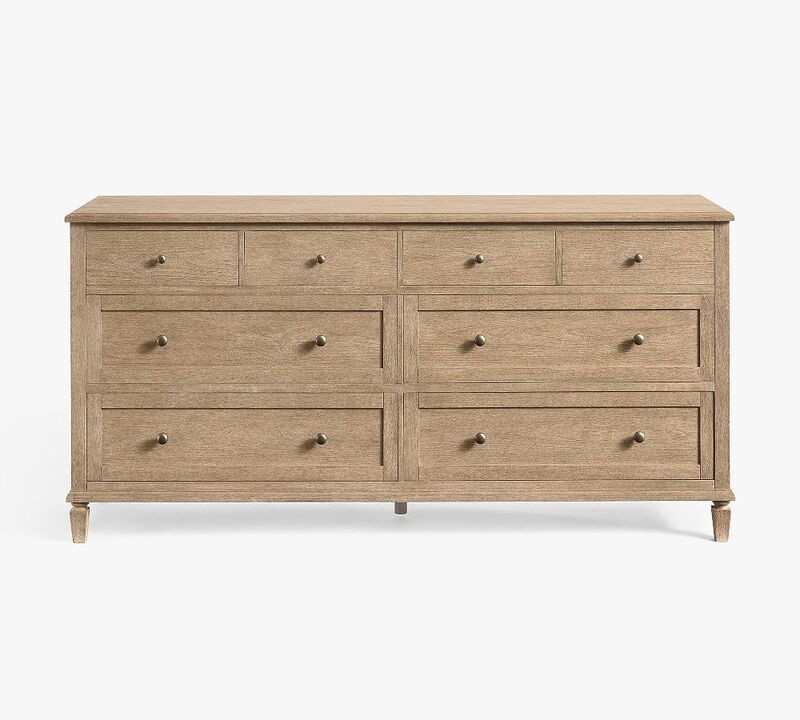
Sausalito 8-Drawer Dresser, around $2,599, 76 inches wide and 36 high. The big one. Eight drawers across more than six feet, in the meranti and veneer build described above, kiln-dried, anti-tip kit included, Contract Grade and UL GREENGUARD Gold. If you are furnishing a primary bedroom and you want one piece to hold everything, this is the piece to look at, and the extra money over a standard dresser buys width, drawer count and a fully specified build.

Pottery Barn
Penelope Upholstered Armchair, Polyester Wrapped Cushions, Heathered Chenille Stone
📏 33.0"W
Unlock Member Pricing →
Pottery Barn
Chris Loves Julia Extra Wide Dresser, Onyx Wood
📏 62.0"W x 36.0"H x 18.0"L
Unlock Member Pricing →
Pottery Barn
Sausalito 8-Drawer Dresser, Seadrift, 76"
📏 76.0"W x 36.0"H
Unlock Member Pricing →Who it is for, and who should look elsewhere
Pottery Barn suits people furnishing a traditional or transitional house who want the room to feel finished quickly. Slipcovered sofas, deep case goods, warm wood tones, lots of fabric options. They also run free interior design help and a room planner tool, which is useful if you are working out whether a 76-inch dresser fits under your window.
If your house is modern, their sister brand is the better fit. Same parent company, very different look, and the comparison worth reading is Pottery Barn vs West Elm or the companion piece, Is West Elm Furniture Worth It?
If you want cleaner lines without going fully modern, that is usually a Crate and Barrel vs Pottery Barn decision, and it comes down to style and scale rather than tier.
If you want heavier construction and a longer spec on every piece, you are moving up a price band. Arhaus furniture runs about double what Pottery Barn furniture does, and Pottery Barn vs Arhaus works through what the difference buys.
And if you want a specific frame, a specific fill and a fabric nobody else has, that is a custom workroom, at custom workroom prices and lead times.
What it costs as a member
Everything above is retail. Members do not pay retail.
Membership at Designer Discount Club is free, and members pay 10 to 40 percent off retail, an average of $3,246 a year, on the piece they actually wanted in the fabric they actually wanted. Design help comes with it, so a question about a size or a weave goes to our team any time you have one. This is a brand people buy a room's worth of at once, which is where the rest of the membership shows: everything you pick goes in one cart with one order to follow, whether it comes from one store or four, we partner with over 400 top brands, and a member success rep runs the whole order and answers in chat when something needs sorting.
That changes the math on the pieces that were already good. The dresser that felt like too much money becomes an easy yes, and the room gets finished in one order instead of three.
Frequently Asked Questions
Is Pottery Barn furniture good quality?
What does Contract Grade mean at Pottery Barn?
Is Pottery Barn real wood or veneer?
How much does Pottery Barn furniture cost?
Is Pottery Barn better than West Elm?
Is Pottery Barn worth the price?
Does Pottery Barn offer design help?
The short version
Buy Pottery Barn for the sofa, the sectional and the big bedroom case goods, where the construction is solid and the scale is hard to find elsewhere at the price. Be more selective on the trend-driven pieces. And if you are furnishing a whole room, use their design help before you order to get the scale right.
Browse Pottery Barn to see the range in one place, or read Pottery Barn vs West Elm and Crate and Barrel vs Pottery Barn if you are still deciding between brands.
Join designerdiscount.club free and furnish the whole room at member pricing, from the sofa to the dresser to the lamps, with our designers on call and one order to follow all the way to your door.

Enjoy exclusive interior designer trade discounts on furniture, decor, lighting, and more from over 400 top brands. Membership is free, and members save 10% to 40% off retail, an average of $3,246 a year, with one cart that works across multiple stores.