What Size Rug for Your Living Room
An 8' x 10' rug fits most living rooms and a 9' x 12' takes over once the room reaches about 13 by 16 feet. Here are the room measurements, the clearances, and what each size costs.
Designer Discount Club
For most living rooms the answer is an 8' x 10' rug, and it becomes a 9' x 12' once the room reaches about 13 by 16 feet. Underneath both sizes is one rule that settles almost every case: the rug has to be large enough that the front legs of every seating piece rest on it. A rug floating in the middle of the furniture with bare floor under every leg is too small.
Key Takeaways
- •The front legs of every seating piece should sit on the rug. That is the test.
- •8' x 10' suits most living rooms, roughly 11 x 13 up to 12 x 15 feet.
- •9' x 12' takes over at about 13 x 16 feet and larger.
- •Leave 12 to 18 inches of bare floor between the rug and the walls.
- •The rug should run at least 6 inches past each end of the sofa.
- •When you are between two sizes, buy the larger one.
The rule: front legs on
Every seating piece in the conversation area should have its front legs on the rug. That single test does more for a room than any measurement, because it ties the furniture together into one group instead of leaving each piece on its own patch of floor.
There are three workable placements:
- All legs on. The most generous look, and the one that makes a room feel finished. It needs the biggest rug, usually a 9' x 12' or larger.
- Front legs on. The standard for most living rooms. The sofa and chairs sit at the rug's edge with their front legs on it, and the back legs on the floor.
- Coffee table only. A rug that reaches nothing but the coffee table shrinks the room. Avoid it unless the space is tiny and there is no other option.
The coffee table should always sit fully on the rug, whichever placement you use.
Match the rug to the room
Measure the room wall to wall first, then size the rug to it.
| Room size | Rug size | What it gets you |
|---|---|---|
| Up to 10 x 12 ft | 5' x 8' | A small seating group, front legs on, in an apartment living room |
| 10 x 12 to 11 x 13 ft | 6' x 9' | The step between sizes when an 8' x 10' would crowd the baseboards |
| 11 x 13 to 12 x 15 ft | 8' x 10' | Sofa plus two chairs, front legs on, with floor showing all around |
| 13 x 16 to 14 x 18 ft | 9' x 12' | All legs on for most layouts |
| 15 x 18 ft and up | 10' x 14' or 12' x 15' | A full seating zone in a large or open-plan room |
Tape the outline on the floor before you buy. Painter's tape takes five minutes and shows you things a measurement will not, like whether the rug lands under the swing of a door or cuts a walkway in half.
8' x 10' vs 9' x 12'
A 9' x 12' is 108 square feet against 80 for an 8' x 10', so it is roughly a third larger. That extra foot on each side is usually what moves a layout from front-legs-on to all-legs-on.
Choose the 8' x 10' when the room is 13 to 15 feet on its long wall, when the seating group is a sofa and one or two chairs, or when a bigger rug would run closer than a foot to the baseboards.
Choose the 9' x 12' when the room is 16 feet or longer, when you have a sectional, or when the seating group has four or more pieces. In a big room an 8' x 10' just looks undersized.
Cost tracks size closely. Across the rugs we carry, the 8' x 10' size centers around $1,100 and the 9' x 12' around $1,400, with plenty above and below in both. A 5' x 8' centers closer to $600. Prices move, so check the product page before you order.
Clearances and edges
Leave 12 to 18 inches of bare floor between the rug and the walls. Eight inches is the minimum in a small room. Any closer and the rug starts to read as wall-to-wall carpet.
Two more edge rules worth keeping:
- The rug should extend at least 6 inches past each end of the sofa, and 8 to 10 inches looks better.
- Keep the rug out of the main walkway if you can. A rug edge in a traffic path is a trip hazard and it wears first.
In an open-plan room, forget the walls and size to the furniture instead. The rug defines the seating zone, so it should sit under the whole group and stop short of the dining or kitchen area.
Buy the rug pad too
A pad keeps the rug from sliding, adds cushion underfoot, and takes the wear that would otherwise go into the rug's foundation. Buy the pad an inch shorter than the rug on each side so it never shows. It is the cheapest part of the purchase and it protects the expensive part.
What living room rugs cost
Across the 40 rug brands we carry, prices run roughly $150 to $2,500, with the middle of the range near $800. Wool is the most common fiber at that price and the one to expect.
What members pay
Members pay 10 to 40 percent off retail on the rugs above, an average of $3,246 a year. Membership is free, it covers over 400 top brands, and design help comes with it, so a second opinion on a size or a color is a message away whenever you want one. Request your member price on the rug you picked, and a member success rep places the order and takes it up with the brand directly if a delivery needs chasing.
Three rugs worth a look
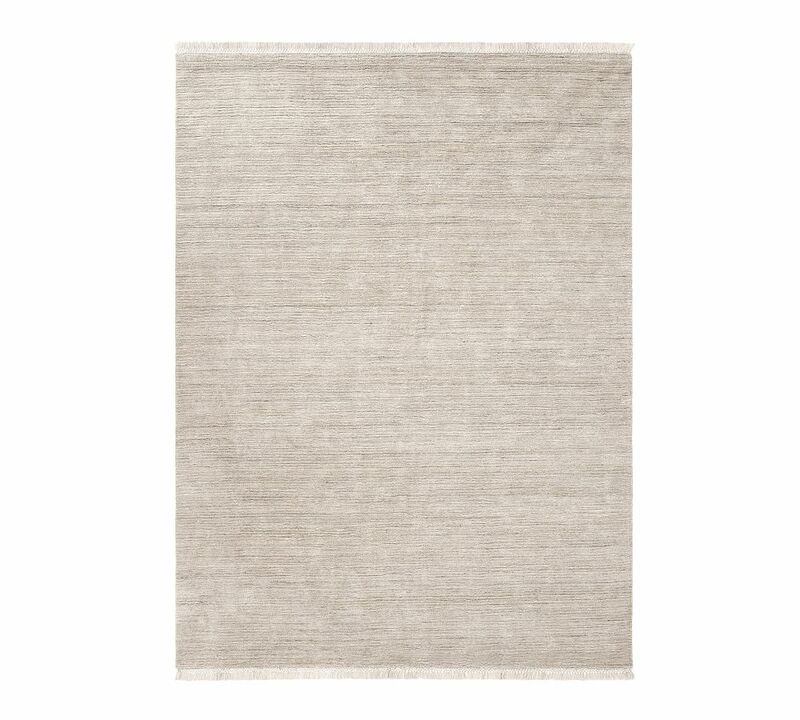
Heath Performance Rug, 8' x 10' by Pottery Barn measures 96 by 120 inches and is made of synthetic and recycled material. It is a durable polyester that resists fading and stains, hand-loomed and triple-knotted so the heathered surface hides dirt in high-traffic areas. A sensible answer for a room with kids or a dog.
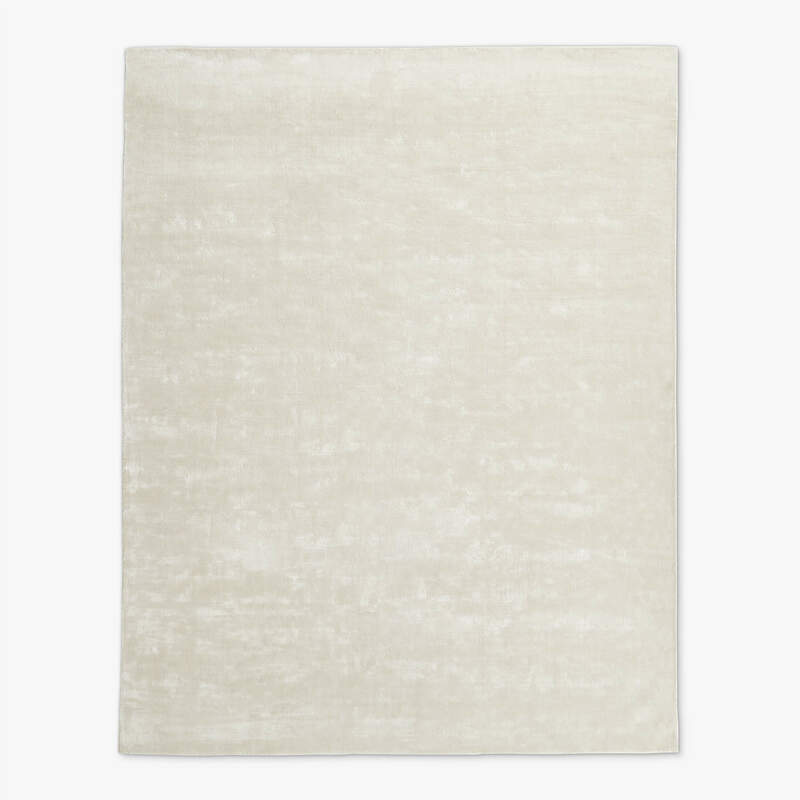
Anders Ivory TENCEL Lyocell Area Rug by CB2 is the 9' x 12' option in the Anders line, which CB2 lists under its 6' x 9' name, so check the size on the page before you buy. It measures 108 by 144 inches with a pile height of 7 to 8 millimeters. It is 100 percent TENCEL Lyocell, suited to medium-traffic areas.
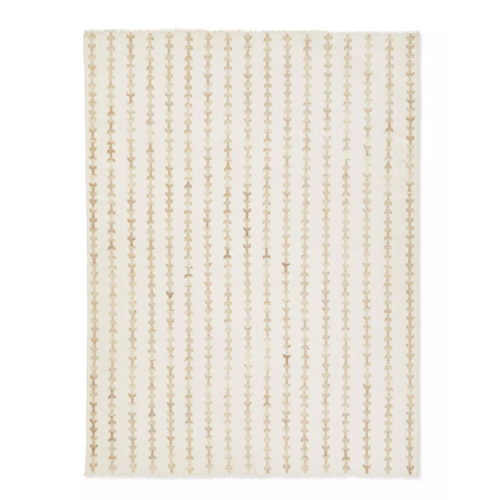
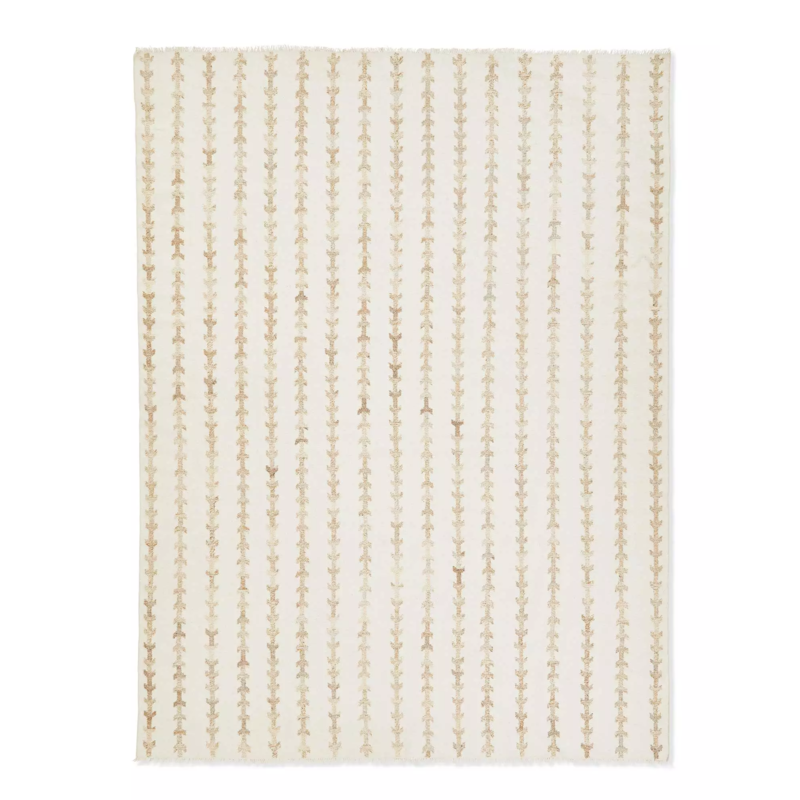
Fairfax Rug, Natural, 8' x 10' by Serena and Lily is a kilim-style rug with an arrow motif, in a natural colorway. Kilims are flatwoven, so they sit low, which helps when the rug has to clear a door swing or meet a room with existing carpet.

Pottery Barn
Heath Performance Rug, 8' x 10', Heathered Stone
📏 96.0"W x 120.0"L
Unlock Member Pricing →
CB2
Anders Ivory TENCEL™ Lyocell Area Rug 9'x12'
📏 108.0"W x 144.0"D x 0.5"H
Unlock Member Pricing →
Serena and Lily
Fairfax Rug Natural, 8' x 10'
Frequently Asked Questions
What size rug do I need for a living room?
Is an 8x10 or 9x12 rug better?
Should all the furniture legs be on the rug?
How much floor should show around a rug?
What size rug goes under a sectional?
Can a rug be too big for a living room?
Before you shop
Measure the room, tape the rug outline on the floor, and stand your furniture at the edges of the tape to check the front legs. If the tape shows less than a foot of floor at the baseboards, drop a size. If your sofa hangs off the ends, go up.
Then browse living room furniture to see the rugs alongside the seating they have to work with, or go straight to Pottery Barn and CB2 if you already know the look you want.
Join designerdiscount.club free and buy the rug you taped out, at designer pricing, from over 400 top brands. Our designers are there for the color question, and the rug, the sofa and the coffee table all go in one cart and arrive at your door as one order.

Enjoy exclusive interior designer trade discounts on furniture, decor, lighting, and more from over 400 top brands. Membership is free, and members save 10% to 40% off retail, an average of $3,246 a year, with one cart that works across multiple stores.